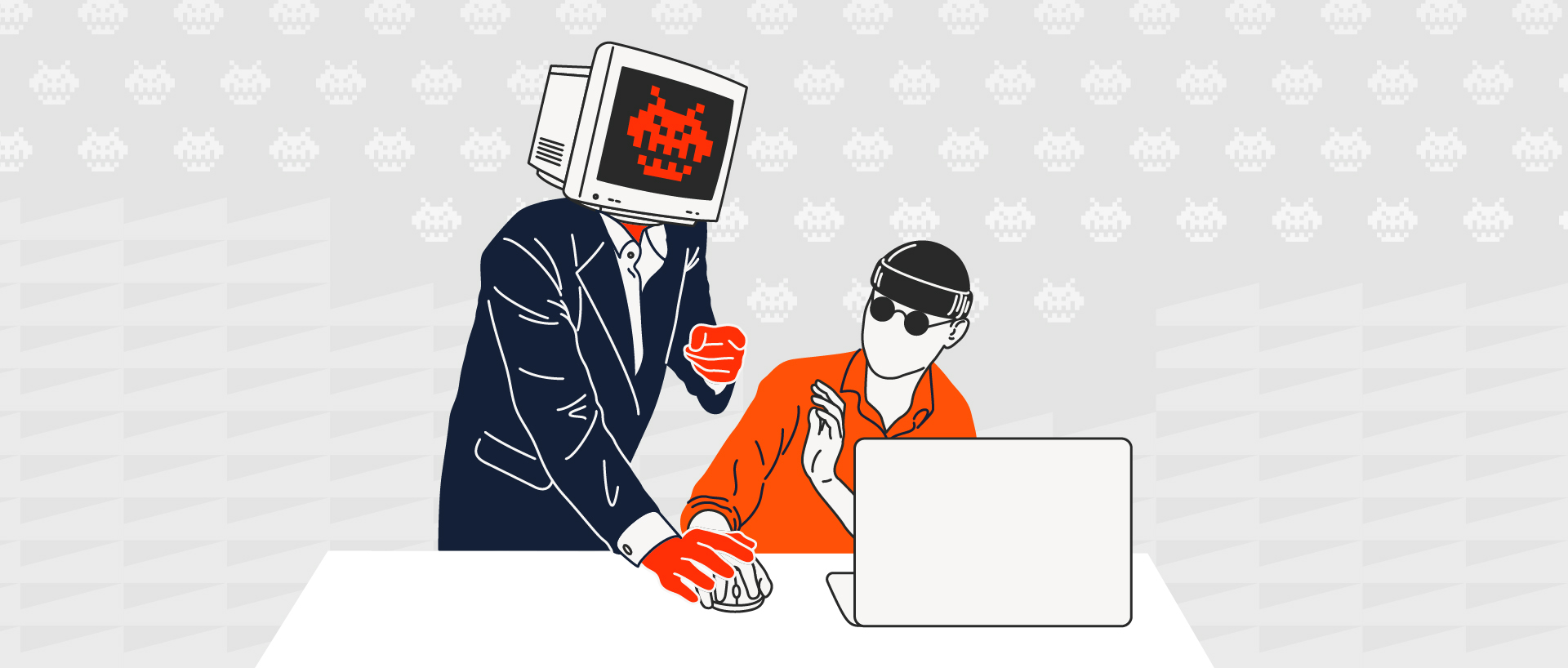



I remember when the first smart shops opened in Katowice. All you had to do was walk in off the street, pick something off the shelf, pay, and leave. It was civilized, no shadiness, no risk. My friends from the Tysiąclecia neighborhood all agreed that a new era had dawned – finally, every adult could try something without having to wander the park paths at night and look over their shoulders in paranoia. After a few months, some of my friends stopped being impressed by anything, but they knew exactly what the emergency room looked like from the inside.
These memories came back to me under rather unexpected circumstances. When, at two in the morning, I was sitting in front of my computer, transferring money for the third time to buy… the tokens required for the LLM to continue working. And all of this just to polish the new version of my proprietary tool, which I was never going to use for anything.
How I Fell Down the Rabbit Hole
I’ll start with a confession. I don’t consider myself a programmer. I can’t write code, and to be honest, I’ve given the subject a wide berth for years. Quietly, however, I watched Lovable’s progress and read about what the latest versions of GPT and Claude could do. I rejoiced as a strategist and entrepreneur, hoping that tech companies would be bursting at the seams and that the prices of programming services would finally drop to reasonable levels.
Still, I didn’t dare to touch programming myself. Until I received a quote for writing a piece of code for our internal Briefit project. A small tool designed to help digitize discovery processes.
I was told that completing the task would take months and cost one hundred thousand zlotys. One hundred thousand. At that moment, I did something I wouldn’t have even considered a year earlier – I decided to sit down and see if I was too clueless to tackle this on my own.
I ended the evening ten hours later in a state that people who take ketamine call a K-hole. Time and space ceased to matter, and I experienced the absolute. My absolute was that I had designed, prototyped, and seen a working tool for consultants to uncover hidden needs in conversations with clients.
It took four hours. Then I switched to Lovable and got a similar solution, but with a differently interpreted logic. Then a new chat. And another. Since we already knew the general method worked, we had to press on and see which tool was best. The tokens were running out. Ten euros extra. Another ten. Twenty. Fifty. By morning, my card showed a balance that a moderately wealthy cocaine user from the Tysiąclecia Housing Estate wouldn’t be ashamed of.
A touch of God for tokens
I’m not saying anything groundbreaking when I say that vibe coding – the method of creating software by viewing code through a “human” conversation with an LLM – is addictive. It’s worth breaking this mechanism down into its basic components, though, because there’s a specific danger lurking within it that most people (including founders) don’t see.
A typical loop looks like this. You come up with an idea, type in a prompt, and after a moment, you get a working result. You type “fix this,” and you get another one. “And add this too” – and you keep going. For anyone (and especially for ADHD folks like me), it’s like a gift from God. What had been sitting in my head for months as a vague idea suddenly materializes on the screen within minutes. No months of waiting for the development team’s results. No compromises with the designer. No explaining the same thing three times to the frontend developer.
This isn’t something meant to solve your business problem – or any other problem. It’s a quick reward for the mind. A silly euphoric rush that pumps dopamine through a system of micro-victories. Idea, prompt, result, tweak, result, tweak. Suddenly, six hours have flown by, and your sense of agency is so strong that in a moment you’d be ready to climb Everest in flip-flops. The problem is that after a few doses, the dopamine stops working as strongly. It’s exactly the same mechanism as with any addiction, from gambling to cocaine. Just in a slightly more wholesome package.
“This isn’t something meant to solve your problem. It’s a quick reward for the mind. A silly euphoric high that pumps dopamine through a system of micro-victories.”.
When I realized this, I did a little survey among my friends. I call a friend – let’s call him Łukasz H. He tells me he’s not doing anything else right now – he’s set up his own server, with forty-three AI agents on it, and he’s currently writing an orchestrator to tie them all together. I’m chatting with a friend, the co-owner of a UX agency. She admitted that she can spend half a day just getting into the coding vibe. I show what I’ve produced to my business partner, Kuba Nagórski. A week later, he calls me to say he pulled an all-nighter with an LLM himself and there’s something wonderful about it.
Life has taught me that if too many people around me start agreeing with my viewpoint or obsession, we’ve probably all just fallen into the same trap. How can I tell if that’s what happened this time?
Dr. Frankenstein’s Menagerie
Let me ask one question to everyone who nodded in agreement while reading the previous paragraph. Hand on heart: how many of the things you’ve recently coded have actually been put to real use? How many of those tools are in use today at your company, in your team, or at a client’s site? What have you implemented, and what has remained in the realm of colorful fantasies?
I’m betting the answer will be alarming.
If we were to look into the accounts of most vibe coders, we’d likely end up in Dr. Frankenstein’s lab. There we’d find dozens of twisted monsters with oversized growths, six pairs of eyes, and unfinished limbs. Aborted technological chimeras. Prototypes that were never meant to see the light of day. If collecting such a menagerie isn’t your conscious ambition, it’s worth pausing for a moment.
Beneath each of these little projects lies something we don’t like to think about when playing with AI: technological debt. Everything that’s simple, fast, and enjoyable comes at a price. In the case of stimulants, it’s a broken reward system, strained relationships, and the prospect of painful withdrawal. In the case of vibe coding – the dream software that starts falling apart after just five minutes of real-world use. Full of bugs and flawed solutions that a professional programmer would catch in testing, and which are so basic that it would be best to code everything from scratch. But since we aren’t specialists, we waste another six hours smoothing over the facade.
“Behind each of these little projects lies technical debt”.
I’ll add that this debt doesn’t grow linearly. The first fixes in a project usually go quickly, almost painlessly. You click, modify, done. The tenth change already takes about three times as long as the first. The twentieth, even ten times as long. At some point, you realize you’re spending more hours patching features that stopped working after the fixes than on adding anything new. You hit a wall. From there on, all that awaits you is a struggle to maintain the status quo, with no chance for growth.
Don't just fix the symptoms. Start with a diagnosis
Master your dopamine
I’m not writing this to discourage you from experimenting with vibe coding. I use it myself, and I believe that any founder in the tech or digital industry who, by 2026, doesn’t have at least a basic understanding of it is consciously cutting themselves off from an important bubble. The question is: where is the line between a tool and entertainment? To use Jungian metaphor: where does agency end, and where does feeding the shadow begin?
I have a simple method for this that I’ve been using for years in strategic work: the five “whys” technique. Often, though, it’s enough to boil it down to just one. Before you sit down with Claude or Lovable, ask yourself honestly:
- Why the hell am I doing this in the first place?
- Who am I doing this for?
- What do I want to do with this when I’m done?
- How am I going to implement this?
- How much is this costing me? Realistically, including my own time and what I didn’t get done in the process?
I’ll give a concrete example from my own experience. My tool for consultants, mentioned at the beginning, had one task. The idea was to show the sales department the logic of a process that until then existed only in my head and in PowerPoint presentations. I had to account for the relationships between the questions asked in the first stage of the conversation and the proposals at the end; a cascade of decisions that can’t be properly shown in a static presentation. The salespeople weren’t even supposed to use it on a daily basis – I wanted them to experience my logic in action, understand it, and translate it into their own process.
In this one role, vibe coding worked brilliantly. It gave me a form I wouldn’t have been able to achieve otherwise within a reasonable timeframe or budget. So I can say it was a strategic decision, not a dopamine-driven one.
When I later wanted that same tool to become a real, production-ready system that people use every day, I began to see how many holes there were in it. How certain things had to be written on the side. How the logic that worked in a sterile demo starts to fall apart in everyday use. I got it to a certain level and handed it over to a professional team. It’s their job, and they’re the ones who know how to avoid leaving technical debt underneath that will come back to haunt me with interest in six months.
You’re an architect, not a coder
There’s one thing that Vibe Coding really changes in founders’ minds, and for that I’ll always be grateful to him. It’s what we call “communication risk” at our company. It’s the gap between what you think you said and what the other party understood.
For years, when business owners wanted to build anything digital, they hit a wall. They had a vision in their heads. They had business knowledge. But they didn’t have access to designers, product managers, or developers. They had to rely on a chain where something gets lost at every link – you tell the product manager, the product manager tells the designer, the designer tells the developers. Such a process inevitably turns into a game of telephone, where the result resembles a caricature of the original idea.
Vibe coding has the potential to reduce this gap to virtually zero. In my opinion, this is where its real value lies for a founder. You might not code everything yourself, but you can build a prototype to show a professional team. I want it to work something like this: these logic gates are essential, these screens are needed, and here I see a problem I can’t solve yet.
“Vibe coding has the potential to reduce the gap resulting from communication risks to almost zero”.
Five hours of your time, costing, say, two and a half thousand zlotys from your personal budget, can save the implementation company dozens of hours and tens of thousands in the process itself. In some projects, these numbers are many times greater. That’s a tangible investment. But to do this wisely, you need to remember your role.
A founder is an architect. They are not a developer. Contrary to what the model whispers in their ear at two in the morning, they cannot replace a team of developers. They are the one who knows why the tool is being created in the first place, for whom, and what business problems it is meant to solve. The rest is craftsmanship and, ultimately, work for professionals.
The hardest thing is to say no to yourself
I won’t kill my fascination with the vibe of coding. I don’t want to kill it, anyway. Over the past month, I’ve coded quite a few things that had been gathering dust in my head for years. Along the way, I saw where our internal tools make sense and where they’re not worth the effort. That’s real value I wouldn’t trade for any amount of money.
I’ve also learned to honestly answer the question “why” for myself before I sit down to work. If the answers are negative, at least I’m aware that it’s more of a distraction than real work. And there’s nothing wrong with that. It’s always a cheaper and less harmful alternative to snorting lines off a toilet seat at a club.
I don’t even ask the question of whether to use vibe coding – in 2026, there’s only one correct answer. The point is whether a founder can say “no” to themselves and their ambitions at 2 a.m., when the model has just spit out the ninth version of something they’ll never implement anyway. This is a skill they don’t teach in an MBA program, and one that says more about your attitude toward running a business than we’re willing to admit. It’s easy to say no to a client. It’s easy to say no to an employee. It’s much harder to say no to yourself, because the arguments on “both” sides of the table are… yours.
We help founders return to the question “why” before they become hostages to their own fantasies. If you feel like you’re constantly creating, yet your projects are at a standstill – you know where to find us.